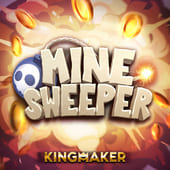
Minesweeper is the real cards-category entry recorded in the JL17 catalogue. Its appeal comes from a compact grid, clues and deliberate choices: open a cell, read the number, mark what you think is unsafe and decide whether the next step is justified.
A Minesweeper Demo or illustrative practice view, if offered, is useful for learning the interface. It is not evidence that the next board will match the practice board, and it cannot guarantee a result.
Minesweeper mechanics begin with a clue and its neighbours
The direct answer is that a numbered cell tells you how many mine cells are adjacent according to the active game's rules. “Adjacent” commonly means the surrounding cells, including diagonals, but confirm the exact help text inside this title. An unopened cell is a decision point; a marked cell is your working note, not proof that the game will accept your guess.
Open cells can reveal more space, while a mine or hazard can end or change a round depending on the displayed rules. The supplied game record names Minesweeper and its image but does not provide a board size, mine count, payout schedule or actual outcome rule. Treat those as questions for the current screen, not facts to invent.
Read a safe-looking move
Minesweeper participation follows a careful clue-reading loop
Choose a visible starting cell only after reading the round and stake controls.
Count the number shown and inspect each neighbouring unopened cell.
Mark a suspected mine only as a reminder; revisit the assumption when new clues appear.
Open a cell only when the available information makes the choice understandable.
Pause after each meaningful change rather than tapping through a pattern.
This is a way to think about known grid mechanics, not a winning system. If the game includes random placement or a chance-based settlement, careful reading can improve understanding without removing uncertainty.
Practice has a boundary
Minesweeper Demo results are illustrative, never predictive
A Minesweeper Demo can show where the clue numbers, flag control, reset option and information panel sit. Use it to rehearse taps on a 320px or 375px screen and to see whether the grid remains legible. Do not copy a practice board's safe-looking pattern into a different round.
Demo results have no power to establish a future mine location, payout or success rate. If practice is not available, read the game's help area and start only when the controls and cost are clear. The point of a demo is orientation, not a promise.
Vocabulary at a glance
Minesweeper terms make a compact grid easier to discuss
Cell
One position on the board that can be open, unopened or marked.
Clue
A number that describes nearby mine cells under the active rules.
Flag
A player note for a suspected hazard; it is not automatically a correct answer.
Cluster
A group of cells whose clues can be read together to narrow a choice.
Reset
A control that starts a new board or round if the game provides it.
Compare the surroundings
Minesweeper belongs to a wider JL17 website guide
The JL17 live games overview is useful for visitors comparing a grid-based puzzle-like screen with dealer-led table formats. The difference is interaction: Minesweeper asks you to interpret local clues, while a live title asks you to read table rules and a round timer.
For access questions, the JL17 download guide covers device checks, browser access and cautious installation decisions. Good access keeps a grid readable, but it does not make an uncertain cell safe.
The About JL17 page adds broader context about categories and responsible entertainment. Use it to understand the destination, not to infer missing Minesweeper mechanics.
Mobile board habits
Minesweeper mobile play needs space for deliberate taps
On a small screen, make sure the grid does not sit under a sticky control, the number text is readable and your thumb can distinguish neighbouring cells. Rotate or zoom only if the layout remains stable. Avoid rapid repeated taps: a quick finger can open the wrong cell before you have finished reading a clue.
Use a stable private connection and protect the account on a shared device. Decide the session time and entertainment amount before opening the board. If a grid becomes frustrating, take a break rather than increasing a stake or starting another round to recover a result.
Limits worth stating
Minesweeper clues improve understanding but do not remove chance
A clue can constrain possibilities on the current board; it cannot guarantee that a separate board will behave the same way. No pattern, streak or previous result turns an uncertain cell into a certainty. The game record also does not support a claim about RTP, a guaranteed reward or a particular payout.
Read each board independently.
Keep marks provisional until the surrounding clues support them.
Never use essential funds or borrowed money for play.
Stop at the personal time and spend limit chosen in advance.
Use official routes and keep login details private.
Ready check
Minesweeper is a good fit when the next tap is explainable
Before opening, ask whether you can describe the board rules, identify the clue numbers and reach the controls comfortably. During play, ask whether the next cell follows from visible information or merely from excitement. After play, close the title when the planned limit arrives. Those questions keep a lively grid in the category of entertainment.
Minesweeper related JL17 games for compact-format comparison
These real cards records offer nearby browsing references. Their images identify catalogue entries only; they do not imply matching rules, availability or outcomes.